Housebound because of the snow. Am I complaining? Not a bit, have spent a wonderful couple of hours browsing the web doing research and a little bit of shopping :-)
So while it keeps snowing outside my window I thought I would write about horse racing! Yes, a little bit unusual considering no one would be racing on a day like this, but that does not stop the would be jockeys, trainers, grooms all having to work and train.
Did you know that Ireland has its own racing academy? Well it does and it is based in the Curragh. It is a state of the art complex. The purpose-built training facility comprises a 30 horse barn, feed room, tack room, hosing bay, large indoor riding school (60 metres x 40 metres), outdoor all-weather ring, simulator coaching room, http://www.blogger.com/img/blank.gifgymnasium and sports hall. Based outside are the eight-horse walker, two furlong sand gallop, schooling hurdles and paddocks. In addition there is an isolation unit, hay barn and machinery shed. Most of the horses at RACE are ex-racehorses that have had success on the track and have kindly been loaned by their owners.
Currently they are running courses including:
Pre Qualified Riders, this course is for those that wish to go on for their Apprenticeship Licence. To receive that licence you undergo a series fo tests at the Turf Club. This course is to ensure you are up to scratch and have not developed any bad habits. Think of it like a pre driving test course.
Trainee Jockey Course is a year long training for those aged between 15-18. On application you will be invited to take part in a weeks trial. Should that trial prove successful you will be offered a place on the course.
See Racing Academy for further information and details on other courses that they run.
Thursday, February 05, 2009

Tuesday, February 03, 2009
Tips for surviving and enjoying our snow

As I type the snow is pelting down outside my window in Dublin.
It has been a while since the island, particularly Dublin, has experienced this much snow.
So here now are some tips to avoid the perils and enjoy the playful potential of snow.
PERILS
Walking
A good pair of slip-grip boots is your best bet for cutting through the slick slush. A fuzzy lining or double pair of socks will help keep your toes toasty warm.
Take smaller steps and be more aware of traffic. The stopping distance for all vehicles greatly increase in these conditions, more so for larger trucks, so think twice before you dash across the street.
Cycling
A good pair of tyres will keep your rubber on the road. Cover up all of your extremities so the biting wind will not bite your skin.
Be careful when going around corners and make sure you are illuminated as snow on windshields and darker conditions are added obstacles for drivers.
Driving

The car advice website Edmunds.com advises drivers to make the following adjustments when driving on snow and ice:
Slow down: Speed limit signs are intended for normal conditions. In snow and ice, reduce your speed considerably because your stopping distance is greatly increased, particularly if you are driving a large vehicle (or you are driving a small vehicle which would get caught under the chassis or wheels of the large vehicles around you).
If you slide, let it ride: Do NOT slam on your brakes if your car starts to slide. Edmunds says when the wheels are braking, their surface becomes static and they can behave like four hockey pucks on their side and can move multidirectionally. Always brake gently and gradually to avoid skidding. If your wheels start to lock up ease off the brake. However if you were going too fast and started to slide in a certain direction, prepare for impact for there is little you can do.
Corner carefully: Taking a corner too quickly is a common way to skid. Apply the brakes as you approach a turn, but release them before you actually take the turn. As Glenn Frey used to say 'Take it easy.'
Look ahead: Double your stopping distance. An easy calculation for this distance is five car lengths for every 20kph you are traveling.
Steering Safely: Rough, imprecise movements of your steering wheel will cause your vehicle to become imbalanced, according to Edmunds. Once that happens, you'll probably skid.
Know your car: Find out if your car is front, rear or all wheel drive and how that affects its performance on snow and ice.
Skid control: Believe it or not, the best thing to do when your car is starting to skid, go against your natural tendencies. Turn INTO the skid and accelerate. However, how much you accelerate depends on the kind of car you have, so ring a local dealership for more information.
Eating
Do not eat yellow snow.
PLAY
Snowballs
Snowballs can be fun if done correctly and safely. To form a snowball, fill your hands up with snow, pack it into a ball and roll it around in your hands. Wet snow is the best for packing. Do NOT put foreign objects like rocks or glass as this is anti-social and might garner the attention of your local gardaí.
Sledding
Find a good hill or slope near you and slide down. Feet first is the safest. Head first should only be done by experienced sledders. Avoid areas with a lot of trees or obstacles as it is near impossible to steer a sled unless you have the kind on the right. If you do not have access to a proper sled, certain rubbish bin tops turned upside down and long, thick cardboard will do. Try and fashion some sort of handle so you do not slide off the sled while going down the hill.
Snow Angels

The most heavenly of all snow activities, snow angels are easy to make. They are best done with proper winter clothing as you will be rubbing against a large amount of snow.
1) Find a big, untouched patch of snow
2) Flop down backwards onto it with arms and legs outstretched
3) Move your arms up and down and legs sideways 5-10 times
4) Carefully get out of the angel so that you do not create too many footprints
For more on this process, check out this YouTube video
Snow Sculptures
Snowmen are the most common snow sculpture to make.
You will need a large tract of snow to produce one as well as a few household products.
1) Form a snowball and start rolling it around in the snow. Make it as big as you can and place it in the spot where you want to build your snowman
2) Roll two more balls of smaller size and stack them on top of your original snowball
3) Add hats, scarfs, ear muffs, carrots for the nose, coal or other appropriate items for the eyes
For other ideas for snow sculptures, check out the International Snow Sculpture Championships website.
Some content courtesy of RTE
Sunday, February 01, 2009
Top Lists for January 2009
We have just had the best month ever on Courses.ie and it is all thanks to YOU. So a very BIG Thank You for your continued support and letting us know that we were right in our plans and outlook for the site and that we are heading in the right direction.

Top 5 Exit Links
Just Dance
Learning Blog
Kilroy's College
CAO Points
Dorset College
Top 5 Popular Pages
Courses.ie home page
Course Directory
Links
CAO Point, Points Points article
Music, Drama, Dance Directory Page
Top 5 Referral Search Terms
Courses (Google)
Fas (Google)
Evening Courses (Google)
CAO Points 2008 (Google)
Courses.ie (Google)
Top 5 Referrers
Google.ie
Google.com
Google.co.uk
uk.search.yahoo.com
news.eircom.net
Top 5 Search Engines
Google
Yahoo
MSN
Live
aol
Top 5 Exit Pages
Links
CAO Points, Points, Article
Just Dance Profiles
3rd Level Mature Student Article
College Open Days
Top 5 Entry Pages
Courses.ie
CAO Points, Points,
Links,
Music, Drama, Dance Directory page
Beauty & Grooming Directory Page
Thank you once again and lets continue climbing together to success.


Top 5 Exit Links
Just Dance
Learning Blog
Kilroy's College
CAO Points
Dorset College
Top 5 Popular Pages
Courses.ie home page
Course Directory
Links
CAO Point, Points Points article
Music, Drama, Dance Directory Page
Top 5 Referral Search Terms
Courses (Google)
Fas (Google)
Evening Courses (Google)
CAO Points 2008 (Google)
Courses.ie (Google)
Top 5 Referrers
Google.ie
Google.com
Google.co.uk
uk.search.yahoo.com
news.eircom.net
Top 5 Search Engines
Yahoo
MSN
Live
aol
Top 5 Exit Pages
Links
CAO Points, Points, Article
Just Dance Profiles
3rd Level Mature Student Article
College Open Days
Top 5 Entry Pages
Courses.ie
CAO Points, Points,
Links,
Music, Drama, Dance Directory page
Beauty & Grooming Directory Page
Thank you once again and lets continue climbing together to success.

Saturday, January 31, 2009
Video Help - How to use Office 2007 to write a good essay
One of the things we love is finding new items that we think will interest you and passing them on...
We have a treasure trove of items waiting to be shown, some quirky, funny, educational, across all mediums...
Here is one from the educational box....How to use Office 2007 to write a good essay....
Just in time for when those essay's are due in!
Microsoft Office:How To Use Office 2007 To Write A Great Essay
We have a treasure trove of items waiting to be shown, some quirky, funny, educational, across all mediums...
Here is one from the educational box....How to use Office 2007 to write a good essay....
Just in time for when those essay's are due in!
Microsoft Office:How To Use Office 2007 To Write A Great Essay
Friday, January 30, 2009
Advance your career and get the distinct competitive advantage

When it comes to your earning power, your education is the most important thing you can do. The more education you have, the better your chances of earning more “lifetime” income.
Your education can come in a number of different ways;
Going to college
Taking Evening Courses
Doing a FETAC Course
Becoming apprenticed to a trade
In House training
Distance Learning
PLC Course
Training on the job
Online Learning
Education is out there. It is available to everyone no matter what age or level of education you have or wish to have.
You can find all the different course providers necessary to keep up-skilling in our Course Directory.
In this trying time we have to get creative and think about the skills we have, the skills we need, and the skills that can be improved on.
Creativity is a combination of qualities, of which all people have to some degree. Creativity depends on many factors including experience, motivation and talent. The way you use these qualities is what makes the difference. According to the publication CollegeJournal.com, there are three factors that determine creative success.
* Problem Solving
CollegeJournal says creative types recognize a problem early and easily. Once they recognize the problem they can begin to formulate an approach to solving.
* Strength
Successful creativity depends on your ability to move past your fears. There will always be no doers and negative opinions. Don't let others stomp on your ideas. Use strength to get past the negativity.
* Originality
Original thinking is what allows you to get outside the box and ignore what everyone else is doing. Processes, norms and stereotypes strip creative thinking of life. Mental tradition is bad, mental flexibility is good.
Start thinking outside the box, stay positive and keep learning! It will advance your career and maybe even take it in a new direction.
Thursday, January 15, 2009
The Adult Learners' Festival
Daily we are hearing about the recession, enough to make us want to dive under the covers and only come up or air when things improve! The 6pm news is enough to have us stampeding to the doctors crying out for prozac! Instead of doing that, add another string to your bow and learn another skill, improve your hobby, meet people and have a laugh along the way.
The AONTAS Adult Learners' Festival will run for the third time from February 2nd to February 6th During that time a number of training providers will be running courses to coincide with the festival. Over one hundred events took place over the week of last year's Festival, with even more due to take place during this year's event.
During the week we will be celebrating twenty years of the VTOS (Vocational Training and Opportunities Scheme) programme, and AONTAS will launch a major piece of research about the lifelong learning needs of older people. For the first time, next years' Festival will include a 'Learn at Work' Day, which takes place on Thursday February 5th, and AONTAS is delighted to be working with ICTU, IBEC and other organisations to use that opportunity to focus on the issue of training, upskilling and education in the workplace. It is more crucial than ever despite the economic downturn, that government invest in adult learning in order to build our future economy and society.
Aontas have supplied a map with locations of were different events around the country are taking place.
The AONTAS Adult Learners' Festival will run for the third time from February 2nd to February 6th During that time a number of training providers will be running courses to coincide with the festival. Over one hundred events took place over the week of last year's Festival, with even more due to take place during this year's event.
During the week we will be celebrating twenty years of the VTOS (Vocational Training and Opportunities Scheme) programme, and AONTAS will launch a major piece of research about the lifelong learning needs of older people. For the first time, next years' Festival will include a 'Learn at Work' Day, which takes place on Thursday February 5th, and AONTAS is delighted to be working with ICTU, IBEC and other organisations to use that opportunity to focus on the issue of training, upskilling and education in the workplace. It is more crucial than ever despite the economic downturn, that government invest in adult learning in order to build our future economy and society.
Aontas have supplied a map with locations of were different events around the country are taking place.
Tuesday, January 13, 2009
CAO course guide for 2009
CAO course guide for 2009
Click the links below to download the latest CAO course guide in PDF format.
Page one
Includes:
Agriculture
Architecture / Architectural Technology
Art and Design, Product Design, Photography
Arts/Humanities
Page two
Includes:
Arts / Humanities (cont..)
Business / Commerce / Accounting
Page three
Includes:
Business/Commerce/Accounting (cont..)
Computer Science / Systems / Electronics
Construction Studies / Valuation / Surveying
Education / Primary Teaching
Education/Second Level Teaching
Engineering
Page four
Includes:
Engineering (cont..)
Food Studies
Hotel Management, Catering, Travel, Tourism
Law
Page five
Includes:
Medical / Health Sciences / Health Care / Pharmacy
Music, Music Technology
Nursing -General
Nursing - Psychiatric
Nursing - Intellectual Disability
Nursing - General and Children's
Nursing - Midwifery
Other Technology Courses
Sciences / Applied Sciences
Page six
Includes:
Sciences / Applied Sciences (cont..)
Social Science, Social Care, Social Studies, Early Childhood Care & Education, Counselling Studies
Sports Science & Management / Recreation / Leisure Studies
Courtesy of the Irish Independent.
Click the links below to download the latest CAO course guide in PDF format.
Page one
Includes:
Agriculture
Architecture / Architectural Technology
Art and Design, Product Design, Photography
Arts/Humanities
Page two
Includes:
Arts / Humanities (cont..)
Business / Commerce / Accounting
Page three
Includes:
Business/Commerce/Accounting (cont..)
Computer Science / Systems / Electronics
Construction Studies / Valuation / Surveying
Education / Primary Teaching
Education/Second Level Teaching
Engineering
Page four
Includes:
Engineering (cont..)
Food Studies
Hotel Management, Catering, Travel, Tourism
Law
Page five
Includes:
Medical / Health Sciences / Health Care / Pharmacy
Music, Music Technology
Nursing -General
Nursing - Psychiatric
Nursing - Intellectual Disability
Nursing - General and Children's
Nursing - Midwifery
Other Technology Courses
Sciences / Applied Sciences
Page six
Includes:
Sciences / Applied Sciences (cont..)
Social Science, Social Care, Social Studies, Early Childhood Care & Education, Counselling Studies
Sports Science & Management / Recreation / Leisure Studies
Courtesy of the Irish Independent.
Saturday, January 10, 2009
Kinsale Community School win Young Scientist of the Year
Congratulations to John O'Callaghan and Liam McCarthy's whose project involved developing a cheap and efficient way for farmers to detect infection in milk cows, and they now become the Young Scientists of the year.
A long-held belief that a drop of washing-up liquid could help warn of infection in milk cows was the trigger that got John (14) and Liam (13) two first years from Kinsale Community School started on their project, entitled "The Development of a convenient Test Method for Somatic Cell Count and its Importance in Milk Production".
Somatic cells are a sign of infection and these appear in the milk. "If the level is high, the cow is fighting an infection," explained Liam. It is "a big deal for the farmer", who receives less if the cell count is high but enjoys a bonus if it is low, said John.
The only way to test was to send a sample for analysis, but this took days, by which time the milk had already reached the production plant.
The students were aware of the "rural myth" and began checking to see if there was any truth to it. They added the washing-up liquid to high cell count milk and found it thickened. They then began a series of tests to study the effect and to devise a way to use the finding.
They focused on a method where viscosity could be gauged by how quickly a sample ran through a narrow tube. "We have done over 1,000 tests and the test developed dramatically over time," Liam said.
The result is the "Ballymartle Milk Test", named after their townland. "This is a test that farmers can use all over Ireland and all over the world," Liam said. "It is very encouraging when you get good results," John added.
The two won a perpetual BT Young Scientist trophy, a cheque for €5,000 and the opportunity to represent Ireland at the European Union Contest for Young Scientists.
Irish Times
A long-held belief that a drop of washing-up liquid could help warn of infection in milk cows was the trigger that got John (14) and Liam (13) two first years from Kinsale Community School started on their project, entitled "The Development of a convenient Test Method for Somatic Cell Count and its Importance in Milk Production".
Somatic cells are a sign of infection and these appear in the milk. "If the level is high, the cow is fighting an infection," explained Liam. It is "a big deal for the farmer", who receives less if the cell count is high but enjoys a bonus if it is low, said John.
The only way to test was to send a sample for analysis, but this took days, by which time the milk had already reached the production plant.
The students were aware of the "rural myth" and began checking to see if there was any truth to it. They added the washing-up liquid to high cell count milk and found it thickened. They then began a series of tests to study the effect and to devise a way to use the finding.
They focused on a method where viscosity could be gauged by how quickly a sample ran through a narrow tube. "We have done over 1,000 tests and the test developed dramatically over time," Liam said.
The result is the "Ballymartle Milk Test", named after their townland. "This is a test that farmers can use all over Ireland and all over the world," Liam said. "It is very encouraging when you get good results," John added.
The two won a perpetual BT Young Scientist trophy, a cheque for €5,000 and the opportunity to represent Ireland at the European Union Contest for Young Scientists.
Irish Times
Friday, January 09, 2009
Log On, Learn
Log On, Learn, a new nationwide initiative bringing Transition Year students and Older People together to share computer and life skills.
Log On, Learn is a programme that aims to provide transition year students with Marketing, Teaching and relating skills as well as insight into another age.
Simply put Log On, Learn is a new way for Older People to learn about computers and the internet.
Providing one on one learning to make sure the pace of learning meets the needs of the Older Person, the programme takes into account the type of technology the Older Person wants to become comfortable with, be that basic PC skills, booking a flight or researching something on the internet.
* An Older person registers with a school that has the programme on their transition year curriculum.
* An Older person and transition year student (IT mentor) are paired
* An Older person and transition year student have 8 weekly training sessions (1-2 hours each), as part of a wider group.
Training sessions will take place in local schools as part of the weekly computer skills class.
Log On, Learn, is sponsored by An Post in partnership with Intel and Microsoft. For more information about Log On, Learn call 01-214 7417.
Log On, Learn is a programme that aims to provide transition year students with Marketing, Teaching and relating skills as well as insight into another age.
Simply put Log On, Learn is a new way for Older People to learn about computers and the internet.
Providing one on one learning to make sure the pace of learning meets the needs of the Older Person, the programme takes into account the type of technology the Older Person wants to become comfortable with, be that basic PC skills, booking a flight or researching something on the internet.
* An Older person registers with a school that has the programme on their transition year curriculum.
* An Older person and transition year student (IT mentor) are paired
* An Older person and transition year student have 8 weekly training sessions (1-2 hours each), as part of a wider group.
Training sessions will take place in local schools as part of the weekly computer skills class.
Log On, Learn, is sponsored by An Post in partnership with Intel and Microsoft. For more information about Log On, Learn call 01-214 7417.
Wednesday, January 07, 2009
How much is that doggy in the window?
I remember that children's song about buying a puppy and the excitement in the house when it was due to arrive. Now it is the turn of the Obama's in the White House to welcome a loving, playful, but untrained four legged friend into their lives. 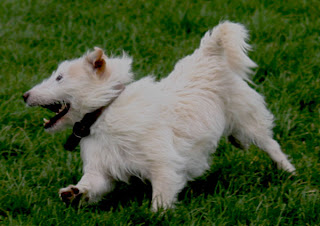
According to Mary Owens, dog lover and owner of Fircroft Canine Training Centre Rathanganin, in today's Irish Times. You need to train your dog to behave in much the same way as we train our children, she advises. The problems arise because we think from a human rather than a dog's perspective.
Mary Owens cautions those who, like the Obamas, are considering a shelter dog. While it is a great thing to do, she says, sentimentality should have no role to play in selecting a dog.
"Make no mistake about it. A shelter dog is often a dog with problems. If you take one and find that you cannot manage it and have to return it to the shelter, then that is the worst thing for the dog."
It's a fair bet that whichever puppy the Obama household opts for, the dog trainers are already pitching for business. And it is highly unlikely that Mr "No Drama" Obama would entertain a mutt with no manners chewing up the Oval Office, no matter how much he loves his daughters.
Down boy Doggy dos and don'ts
Choose your puppy carefully from a recognised breeder who is a member of the Kennel Club. Don't choose the biggest in the litter as they are often the hardest to train - choose the middle-sized one.
Life is busy today so you need to set aside time for a dog in your life. Puppies learn through play. Dogs like company. If you are out all day, it may not be fair on your dog to be home alone.
Reward your dog with a little tasty treat like a small piece of sausage or affection or a game when they do as you wish.
Until the dog learns that you are the boss, he will do as he pleases, including barking excessively, stealing food, jumping up and pulling against the lead.
You must be consistent when you train your dog - practice makes perfect.
If your dog jumps up on people or children, train him by turning on your heel and walking away. Pet and praise him only when he has all four feet on the ground.
If you have had little or no success training your dog yourself, perhaps it is time to call in the professionals.

According to Mary Owens, dog lover and owner of Fircroft Canine Training Centre Rathanganin, in today's Irish Times. You need to train your dog to behave in much the same way as we train our children, she advises. The problems arise because we think from a human rather than a dog's perspective.
"Dogs have a pack mentality and it comes very naturally to them to manipulate you. In short, you need to teach the dog who is the boss in the house. If you allow your dog to sit on the armchair with you, that's fine. But if the dog then decides that he wants the chair all to himself and you end up sitting on a kitchen chair, well, the dog is now in charge."
Mary Owens cautions those who, like the Obamas, are considering a shelter dog. While it is a great thing to do, she says, sentimentality should have no role to play in selecting a dog.
"Make no mistake about it. A shelter dog is often a dog with problems. If you take one and find that you cannot manage it and have to return it to the shelter, then that is the worst thing for the dog."
It's a fair bet that whichever puppy the Obama household opts for, the dog trainers are already pitching for business. And it is highly unlikely that Mr "No Drama" Obama would entertain a mutt with no manners chewing up the Oval Office, no matter how much he loves his daughters.
Down boy Doggy dos and don'ts
Choose your puppy carefully from a recognised breeder who is a member of the Kennel Club. Don't choose the biggest in the litter as they are often the hardest to train - choose the middle-sized one.
Life is busy today so you need to set aside time for a dog in your life. Puppies learn through play. Dogs like company. If you are out all day, it may not be fair on your dog to be home alone.
Reward your dog with a little tasty treat like a small piece of sausage or affection or a game when they do as you wish.
Until the dog learns that you are the boss, he will do as he pleases, including barking excessively, stealing food, jumping up and pulling against the lead.
You must be consistent when you train your dog - practice makes perfect.
If your dog jumps up on people or children, train him by turning on your heel and walking away. Pet and praise him only when he has all four feet on the ground.
If you have had little or no success training your dog yourself, perhaps it is time to call in the professionals.
Monday, January 05, 2009
Keep your CAO choices as broad as possible
BRIAN MOONEY'S ADVICE CENTRE Courtesy of Irish Times.
Given the growing economic crisis and the rapid increase in unemployment across a wide range of sectors of our economy, many current Leaving Cert students pondering their future career are deeply uncertain how they should proceed.
Many older brothers and sisters of this year's Leaving Certificate cohort, who have recently graduated from college, or who have been working for a number of years, are currently unemployed. This is giving rise to huge concern among the 70,000-plus potential applicants to the CAO, who ask seeking places in college in September 2009.
The best advice I can give to all those considering their CAO application at this time is to remember that if you are going to start an undergraduate programme in September 2009, you will be finishing your undergraduate programme in June 2012 at the earliest. If you are one of the 50 per cent of undergraduates who then proceed to a postgraduate programme, your entry date into the labour force will probably be June 2014. The question you must therefore ask yourself is how the labour market might be for your favourite discipline in 2014. The real answer is that nobody knows and the only sensible course of action for you to take is to follow the path that your natural inclinations suggest. Keep your options broad, so as to increase your choices.
A second piece of advice I would give is to keep your CAO choices as broad as you can- unless you are absolutely certain that you want to follow a particular career path such as dentistry, architecture or so on. Students taking an arts, science or law degree will have a huge degree of flexibility in the careers they wish to explore in three years' time. Students who select career specific areas, particularly those that are experiencing rapid changes due to advances in technology - such as media and journalism - may be more limited in their career options in three years' time.
Following the publication by The Irish Times and other newspapers of the progression rates of second-level students in the Republic of Ireland into publicly-funded colleges of the CAO and to colleges in the UK and Northern Ireland through USAC, many people have questioned me about the discrepancy in the progression rates as reported in different publications.
The Irish Times reported the progression rates of students who attended a particular school or private fee-paying college outside the State-funded sector, commonly known as "grind" schools, into the publicly-funded colleges of the CAO and USAC. Other newspapers reported the same progression rates, but based their figures on the number of students who actually "sat" the examination in a particular school or grind school in June 2008.
What is the difference between "attending" and "sitting" the Leaving Certificate in a school or grind school?
Every school and grind school registers the students who "attend" their college with the State Examinations Commission, which passes this information on to the CAO, which passes it on to the third-level colleges. In this way, they know the school or grind school that every students who accepts a first-year undergraduate place "attended". These are the figures, supplied by the colleges, which every newspaper publishes.
The different percentage success-rate figures published by newspapers arise from the fact that if a student "sits" the examination in a school that is not the one he/she is registered as having "attended", this increases the "sit" figure for that school and decreases the "sit" figure of the college he actually "attended".
If he/she secures a place in college, he/she will be credited to the school or grind school he studied at, but counted as having sat the examination elsewhere, thus increasing that school's "sit" figure, and decreasing its reported success rate.
A school with 90 students, of whom 45 secure a college place, has a success rate of 50 per cent. If 10 students from a local grind school "sit" the examination in the local school that school's "sits" figure increases, but as none of these candidates will be credited to the school, its success rate drops to 45 per cent. The grind school, on the other hand, which has 200 students, of whom 120 secure a college place, has a success rate of 60 per cent. If, however, 80 of these students sit the examination elsewhere, its success rate increases to 100 per cent.
The Irish Times uses the only accurate measure of the success rate of schools and grind schools by measuring success rates based on the school attended, rather that where a student happened to "sit" the examination.
Brian Mooney is a guidance counsellor at Oatlands College, Dublin and a former president of the Institute of Guidance Counsellors
Given the growing economic crisis and the rapid increase in unemployment across a wide range of sectors of our economy, many current Leaving Cert students pondering their future career are deeply uncertain how they should proceed.
Many older brothers and sisters of this year's Leaving Certificate cohort, who have recently graduated from college, or who have been working for a number of years, are currently unemployed. This is giving rise to huge concern among the 70,000-plus potential applicants to the CAO, who ask seeking places in college in September 2009.
The best advice I can give to all those considering their CAO application at this time is to remember that if you are going to start an undergraduate programme in September 2009, you will be finishing your undergraduate programme in June 2012 at the earliest. If you are one of the 50 per cent of undergraduates who then proceed to a postgraduate programme, your entry date into the labour force will probably be June 2014. The question you must therefore ask yourself is how the labour market might be for your favourite discipline in 2014. The real answer is that nobody knows and the only sensible course of action for you to take is to follow the path that your natural inclinations suggest. Keep your options broad, so as to increase your choices.
A second piece of advice I would give is to keep your CAO choices as broad as you can- unless you are absolutely certain that you want to follow a particular career path such as dentistry, architecture or so on. Students taking an arts, science or law degree will have a huge degree of flexibility in the careers they wish to explore in three years' time. Students who select career specific areas, particularly those that are experiencing rapid changes due to advances in technology - such as media and journalism - may be more limited in their career options in three years' time.
Following the publication by The Irish Times and other newspapers of the progression rates of second-level students in the Republic of Ireland into publicly-funded colleges of the CAO and to colleges in the UK and Northern Ireland through USAC, many people have questioned me about the discrepancy in the progression rates as reported in different publications.
The Irish Times reported the progression rates of students who attended a particular school or private fee-paying college outside the State-funded sector, commonly known as "grind" schools, into the publicly-funded colleges of the CAO and USAC. Other newspapers reported the same progression rates, but based their figures on the number of students who actually "sat" the examination in a particular school or grind school in June 2008.
What is the difference between "attending" and "sitting" the Leaving Certificate in a school or grind school?
Every school and grind school registers the students who "attend" their college with the State Examinations Commission, which passes this information on to the CAO, which passes it on to the third-level colleges. In this way, they know the school or grind school that every students who accepts a first-year undergraduate place "attended". These are the figures, supplied by the colleges, which every newspaper publishes.
The different percentage success-rate figures published by newspapers arise from the fact that if a student "sits" the examination in a school that is not the one he/she is registered as having "attended", this increases the "sit" figure for that school and decreases the "sit" figure of the college he actually "attended".
If he/she secures a place in college, he/she will be credited to the school or grind school he studied at, but counted as having sat the examination elsewhere, thus increasing that school's "sit" figure, and decreasing its reported success rate.
A school with 90 students, of whom 45 secure a college place, has a success rate of 50 per cent. If 10 students from a local grind school "sit" the examination in the local school that school's "sits" figure increases, but as none of these candidates will be credited to the school, its success rate drops to 45 per cent. The grind school, on the other hand, which has 200 students, of whom 120 secure a college place, has a success rate of 60 per cent. If, however, 80 of these students sit the examination elsewhere, its success rate increases to 100 per cent.
The Irish Times uses the only accurate measure of the success rate of schools and grind schools by measuring success rates based on the school attended, rather that where a student happened to "sit" the examination.
Brian Mooney is a guidance counsellor at Oatlands College, Dublin and a former president of the Institute of Guidance Counsellors
Monday, December 29, 2008
To spell or not to spell........word bain.....
We came upon a terrific post by Sentence First that we got carried away and in error blogged the complete post! For those who are new to blogging that is a No No...and we would like to apologise to Sentence First.
The complete post is worth reading as spelling errors can let us down at very important times. I have received job applications, business emails and letters where misspellings have cost the sender a job interview and possibly a job.
Sentence First gives suggestions that are handy and easy to follow with a list of common spelling errors. I plead guilty to some (thank goodness for spell check) but I have also followed one of his suggestions and found it the perfect remedy for my slip ups.
The following is just a snippit of the post, the complete post can be read under the title 'Spelling Mistakes'.
Courtesy of Sentence First
The complete post is worth reading as spelling errors can let us down at very important times. I have received job applications, business emails and letters where misspellings have cost the sender a job interview and possibly a job.
Sentence First gives suggestions that are handy and easy to follow with a list of common spelling errors. I plead guilty to some (thank goodness for spell check) but I have also followed one of his suggestions and found it the perfect remedy for my slip ups.
The following is just a snippit of the post, the complete post can be read under the title 'Spelling Mistakes'.
Sooner or later everyone has trouble spelling a word. Certain words pose more trouble than others, for a variety of reasons. Some spellings are inherently tricky (e.g. sacrilegious) or counter-intuitive (e.g. pharaoh). Some errant forms are widely mimicked (e.g. accomodation – two cs, two ms and two early os please), while others mislead because they resemble more familiar words or word parts (momento for memento, miniscule for minuscule). Pairs of similar words are often mixed up (e.g. principal and principle).
If you have recurring difficulty spelling certain words, it can be useful to keep a list handy, or to learn mnemonics to help you remember the correct form. For example, if you’re unsure whether it’s hypocrisy or hypocracy, you could use a mantra like “hypocrisy is a pox” or “hypocrisy is a shock, Chrissy”. Is it ad nauseum or ad nauseam? You could say to yourself, “I am nauseated that I can’t remember.” Mnemonics don’t have to make any sense; indeed, sometimes the more absurd ones are easier to remember.Again our apologies to Sentence First for quoting his entire post.
Courtesy of Sentence First
Friday, December 05, 2008
Getting Back to Work After Redundancy
Is the credit crunch affecting you or a member of your family? We are hearing every day about unemployment and how the numbers are rising due to the recession. If redundancy has happened to you or that threat is on the horizon, what steps can you take?
Once the initial shock has worn off it is important to sit down and plan. While it may seem obvious that there are not that many job opportunities out there; there are always some jobs available. 'But I don't have the relevant skills' you reply. Then this is the opportunity to retrain and look for that new job.
Put together a plan of action.
* List what skills you have that are transferable.
* Gather information from employment centres, agencies, newspapers, job sites online, about what additional skills they are looking for that combined with what you already have makes you more easily employable, (or indispensable to your current employer)
* Take a course or courses to upskill.
Putting together your plan of action and up-skilling keeps you positive during a difficult time in your life.
Here is just a short list of some courses that will get you started on the road back to employment that are being run by providers listed with Courses.ie.
Interview soft skills
Computer Course
Security
Safety & Risk Management
Microsoft Office
First Aid
Languages
Customer Care
Buildings Energy Ratings Assessor
Tourism
Complementary Therapy
Once the initial shock has worn off it is important to sit down and plan. While it may seem obvious that there are not that many job opportunities out there; there are always some jobs available. 'But I don't have the relevant skills' you reply. Then this is the opportunity to retrain and look for that new job.
Put together a plan of action.
* List what skills you have that are transferable.
* Gather information from employment centres, agencies, newspapers, job sites online, about what additional skills they are looking for that combined with what you already have makes you more easily employable, (or indispensable to your current employer)
* Take a course or courses to upskill.
Putting together your plan of action and up-skilling keeps you positive during a difficult time in your life.
Here is just a short list of some courses that will get you started on the road back to employment that are being run by providers listed with Courses.ie.
Interview soft skills
Computer Course
Security
Safety & Risk Management
Microsoft Office
First Aid
Languages
Customer Care
Buildings Energy Ratings Assessor
Tourism
Complementary Therapy
Monday, October 13, 2008
Who's afraid of the big bad web?
The web as we lay people know it has been with us for over 10 years now and this is still the early days of it.
It is a medium we really need to get a grasp on, especially if we are parents as the web has changed the way that our children and teenagers communicate.
We teach our children how best to protect themselves in the big wide world and we are comfortable doing so as in many ways we are passing on the wisdom we learnt from our parents and the world is a place we are familiar with.
The web is another matter. Both computers and the web are mediums that have developed relatively recently (apologies to Charles Babbage) and to access the web one must get to grips with a computer. Both of these are stumbling blocks to many parents who watch as their children zoom away on the information superhighway leaving their parents stranded.
To properly guide and protect our children we need to start learning about computers and the web. When you lay down your guidelines and rules children will respect them as they know you have taken the time to learn and use both mediums.
Learning about computers and the web can seem daunting at first because of the new words and language that is used. Once started it is not long before it will all just fall into place and not only are you learning and enjoying new skills but also giving your self esteem a wonderful boost.
The web is a fantastic resource and one that is growing daily and here to stay. It is the biggest library in the world and the main means by which we communicate and this form of communication is changing at a rapid pace offering more and more facilities.
The horror stories are few and far between thankfully. What is far more insidious is the level of bullying that is carried on, or the thoughtless uploading of camera phone pictures, and messages left on social networking sites.
Our children have to be taught to think very carefully before they upload that funny photo of Mary Jane slipping on a night out and landing in the lap of the lads. While it may have been funny at the time, snapped with a camera phone, uploaded and available to all to see. Shown to those that were not there, it looks like something else and now Mary Jane may become the target of some unsavory jokes, rude messages which ultimately rob her of her self esteem and leave her feeling defenceless and violated. Once put up on the web, other people can copy and send on, so you are left with little control.
The best protection we can give our children is to learn about computers and the web and let our children see the safety net we provide them as they explore the wonders of the cyber world. Ask questions about what they use the web for, listen and look at the sites they go to. Read articles and slowly become familiar with the jargon. You are not wasting time by sitting at a computer for a couple of hours surfing the net and looking at different sites, this is your learning curve and one worth taking when it allows us to talk confidently to our children about the pros and cons of the world wide web.
There is a terrific article well worth reading entitled 'who's afraid of the big bad web'. This article was published on the Australian newspaper site The Age. What makes this article different is that the author gives a run down on the most common sites used by children and teenagers today. A must for any parent!
Go on, take the plunge, it is a world full of wonders and delight.
Useful links:
Webwise - information for parents and teachers
Mobile phones and safety - Advice on mobile phone bullying from Childline.
Take a course in your local library or night class from a number of providers all listed on Courses.ie
It is a medium we really need to get a grasp on, especially if we are parents as the web has changed the way that our children and teenagers communicate.
We teach our children how best to protect themselves in the big wide world and we are comfortable doing so as in many ways we are passing on the wisdom we learnt from our parents and the world is a place we are familiar with.
The web is another matter. Both computers and the web are mediums that have developed relatively recently (apologies to Charles Babbage) and to access the web one must get to grips with a computer. Both of these are stumbling blocks to many parents who watch as their children zoom away on the information superhighway leaving their parents stranded.
To properly guide and protect our children we need to start learning about computers and the web. When you lay down your guidelines and rules children will respect them as they know you have taken the time to learn and use both mediums.
Learning about computers and the web can seem daunting at first because of the new words and language that is used. Once started it is not long before it will all just fall into place and not only are you learning and enjoying new skills but also giving your self esteem a wonderful boost.
The web is a fantastic resource and one that is growing daily and here to stay. It is the biggest library in the world and the main means by which we communicate and this form of communication is changing at a rapid pace offering more and more facilities.
The horror stories are few and far between thankfully. What is far more insidious is the level of bullying that is carried on, or the thoughtless uploading of camera phone pictures, and messages left on social networking sites.
Our children have to be taught to think very carefully before they upload that funny photo of Mary Jane slipping on a night out and landing in the lap of the lads. While it may have been funny at the time, snapped with a camera phone, uploaded and available to all to see. Shown to those that were not there, it looks like something else and now Mary Jane may become the target of some unsavory jokes, rude messages which ultimately rob her of her self esteem and leave her feeling defenceless and violated. Once put up on the web, other people can copy and send on, so you are left with little control.
The best protection we can give our children is to learn about computers and the web and let our children see the safety net we provide them as they explore the wonders of the cyber world. Ask questions about what they use the web for, listen and look at the sites they go to. Read articles and slowly become familiar with the jargon. You are not wasting time by sitting at a computer for a couple of hours surfing the net and looking at different sites, this is your learning curve and one worth taking when it allows us to talk confidently to our children about the pros and cons of the world wide web.
There is a terrific article well worth reading entitled 'who's afraid of the big bad web'. This article was published on the Australian newspaper site The Age. What makes this article different is that the author gives a run down on the most common sites used by children and teenagers today. A must for any parent!
"Kids are fearless and many parents are clueless when it comes to the internet."
But instead of being daunted, Ms Treyvaud says parents should draw on their wisdom and experience. "Rather than taking a gloom and doom approach to the internet, ask yourself, 'What can I do to help my children navigate it?'."
Go on, take the plunge, it is a world full of wonders and delight.
Useful links:
Webwise - information for parents and teachers
Mobile phones and safety - Advice on mobile phone bullying from Childline.
Take a course in your local library or night class from a number of providers all listed on Courses.ie
Wednesday, September 03, 2008
What to do when your horse has an accident
Your horse has banged his head in the horsebox and is bleeding profusely. Do you know what to do? Accidents happen, as the saying goes, but what happens straight after an accident is critical. When faced with an emergency, how should you react and what are the first steps you should take?
Firstly, don't panic. You need to assess the injury calmly and decide on the correct action to take, be it to start some kind of treatment yourself or to simply stabilise the situation until the vet arrives.
Joe Collins, MRCVS, from the veterinary department of UCD, is a member of the equine group of Veterinary Ireland. He says the most important message to get across to horse owners is that preventing injuries is infinitely better than treating them.
"A little bit of thought before you go to do something is the best to prevent a lot of accidents," he says.
"I've had to shoot multiple horses because they were loaded into horseboxes with rotten floors, bad ramps and holes where a horse's foot has slipped through.
"Too many accidents are preventable."
He advises owners to check horseboxes for signs of damage, particularly the floor and ramp, and boxes with gaps that a foal's foot could slip through.
"People can be very lax about what's lying around in the yard -- nails, forks etc," he says. "So, have a look around at the potential accident-causing objects."
Showjumping cups left in the uprights are often the cause of tear injuries to horses and ponies, he says, while using old tack is another area where accidents can happen.
Preventing accidents
"The tetanus vaccination is imperative because tetanus is much easier to prevent than treat. It is fatal for horses in most cases," says the vet.
The initial tetanus vaccine requires two injections four to six weeks apart, followed by an annual booster injection.
"It's an excellent vaccine that works very well compared to other horse vaccines, so owners should be using it."
So what are the most common injuries and what can you do while you wait for the vet to arrive?
Small puncture wounds, such as a nail in the foot, are commonplace and, although they may look harmless enough, can cause potentially disastrous effects.
When examining a nail in the foot, it is useful to draw two imaginary lines across the hoof. If the nail has pierced the first third nearest the heel, or the third nearest the toe, these are potentially less serious than if the nail has punctured the middle third.
Punctures to the centre of the hoof and frog area are most dangerous because of the vital structures located underneath: the navicular bone, deep digital flexor tendon and coffin joint.
"If the middle third of the foot is pierced, I would recommend leaving the nail in place until the vet arrives, because if you pull it out it can be almost impossible to find the spot again," says the vet.
If the horse has pierced a hind foot, he will rest the foot himself; even if the puncture is a forefoot, he will take the weight off himself.
The priority for a puncture wound to the foot is to make the hole bigger to allow drainage of the wound.
"Bacteria, particularly anaerobic ones such as tetanus, love deep wounds that seal up and allow infection to fester inside.
"The worst thing you could do would be take the nail out, let the hole close up, say the horse is fine and leave the wound susceptible to that type of infection," says Joe.
"In four days time you could have a disaster on your hands.
"An old teacher of mine used to say that 'the solution to pollution is dilution' and he was right."
He recommends opening up the hole and flushing the wound to reduce the level of infection. Even tap water will do to reduce the level of bacteria present.
Some owners may decide to call their farrier to deal with foot-related injuries and the vet says this makes sense in many cases.
"Your farrier is a very good option because he can open up the wound for you and they are usually excellent at working with feet. However, you will need the vet for injuries to the middle third of the foot, for tetanus shots and possibly sedation for younger animals," he adds.
Puncture wounds to other areas of the body, such as a blackthorn in the knee or fetlock joint or into the tendon sheath, should always be examined by a vet.
"They are potentially disastrous because infection can build up in the sealed synovial cavity and there is no drainage if the hole outside closes up."
However, the more visually dramatic wounds such as head injuries and flaps of skin torn away are often less problematic than you would first imagine.
Head injuries, in particular, can look terrible because the head has a very good blood supply.
"You might think your horse needs a blood transfusion because he has been bleeding profusely. In reality, horses only lose a small amount of blood and this can look worse because it gets diluted with water," says the vet.
"Something like 8pc of the horse's bodyweight is made up of blood so he has litres and litres of it."
Arterial blood will be bright red and spurt out under pressure as the heart pumps. A common site for this type of bleeding is on the side of the fetlock where there is an artery that is easily knocked.
Bleeding from a vein is slower and drips rather than spurts in a steady flow. It is darker in colour, dark red or purple to look at.
The first action to take for a wound that is pumping out blood is to stop the bleeding.
Unfortunately, we can't do to horses what is recommended for humans: to raise the bleeding part, so pressure is applied instead.
A clean pad should be applied to the wound and the area bandaged firmly to slow the flow of blood until your vet arrives.
"In most instances, the bleeding will have been beneficial in helping to flush out contamination before you apply a really clean bandage," he says.
However, even the ugliest of tears can heal quite easily with help from the vet. Colic is another fairly common occurrence with horses. Some 90pc of colic turns out to be spasmodic, which needs little treatment and passes with time.
Getting comfortable
While the traditional advice to owners has always been to prevent the horse from lying down and to keep the animal moving, Joe says some owners take this advice too far.
"I disagree somewhat with not letting animals lie down because I've gone out to yards where the horse is exhausted from being walked to an unreasonable extent," he says.
"I think it is perfectly reasonable to allow a horse to lie down and even roll occasionally, as long as he is not going to injure himself through rolling.
"The animal is only trying to get into a more comfortable position.
"With some young horses this means lying on their back with their legs in the air."
He compares mild colic to human bellyache, where the most comfortable thing to do is lie down on the sofa or bed until it passes.
"Some exercise and walking is okay, but certainly not to the point of exhaustion," he concludes.
A first aid box is always useful in an emergency and one should always be kept in the yard or brought along when travelling.
Clean bandages, gamgee tissue and a poultice are essential, while a bottle of sterile fluid for flushing wounds should also be kept.
"A hoof knife is another useful thing to have.
"You're not going to become a farrier but it can be handy for opening wounds in the hoof," says Joe.
He does not recommend stocking up on drugs because they are likely to go out of date by the time they are used and are then useless.
Over-zealous application of disinfectants can do more harm than good, he says.
"Very often chemicals are used too concentrated and while they may kill infection, they can also damage the tissue.
"Iodine diluted to the colour of weak tea is the most effective. Dilute it correctly and use copious amounts to flush out wounds," he recommends.
Just remember what the teacher said: the solution to pollution is dilution.
- Caitriona Murphy
Irish Independent
Firstly, don't panic. You need to assess the injury calmly and decide on the correct action to take, be it to start some kind of treatment yourself or to simply stabilise the situation until the vet arrives.

Joe Collins, MRCVS, from the veterinary department of UCD, is a member of the equine group of Veterinary Ireland. He says the most important message to get across to horse owners is that preventing injuries is infinitely better than treating them.
"A little bit of thought before you go to do something is the best to prevent a lot of accidents," he says.
"I've had to shoot multiple horses because they were loaded into horseboxes with rotten floors, bad ramps and holes where a horse's foot has slipped through.
"Too many accidents are preventable."
He advises owners to check horseboxes for signs of damage, particularly the floor and ramp, and boxes with gaps that a foal's foot could slip through.
"People can be very lax about what's lying around in the yard -- nails, forks etc," he says. "So, have a look around at the potential accident-causing objects."
Showjumping cups left in the uprights are often the cause of tear injuries to horses and ponies, he says, while using old tack is another area where accidents can happen.
Preventing accidents
"The tetanus vaccination is imperative because tetanus is much easier to prevent than treat. It is fatal for horses in most cases," says the vet.
The initial tetanus vaccine requires two injections four to six weeks apart, followed by an annual booster injection.
"It's an excellent vaccine that works very well compared to other horse vaccines, so owners should be using it."
So what are the most common injuries and what can you do while you wait for the vet to arrive?
Small puncture wounds, such as a nail in the foot, are commonplace and, although they may look harmless enough, can cause potentially disastrous effects.
When examining a nail in the foot, it is useful to draw two imaginary lines across the hoof. If the nail has pierced the first third nearest the heel, or the third nearest the toe, these are potentially less serious than if the nail has punctured the middle third.
Punctures to the centre of the hoof and frog area are most dangerous because of the vital structures located underneath: the navicular bone, deep digital flexor tendon and coffin joint.
"If the middle third of the foot is pierced, I would recommend leaving the nail in place until the vet arrives, because if you pull it out it can be almost impossible to find the spot again," says the vet.
If the horse has pierced a hind foot, he will rest the foot himself; even if the puncture is a forefoot, he will take the weight off himself.
The priority for a puncture wound to the foot is to make the hole bigger to allow drainage of the wound.
"Bacteria, particularly anaerobic ones such as tetanus, love deep wounds that seal up and allow infection to fester inside.
"The worst thing you could do would be take the nail out, let the hole close up, say the horse is fine and leave the wound susceptible to that type of infection," says Joe.
"In four days time you could have a disaster on your hands.
"An old teacher of mine used to say that 'the solution to pollution is dilution' and he was right."
He recommends opening up the hole and flushing the wound to reduce the level of infection. Even tap water will do to reduce the level of bacteria present.
Some owners may decide to call their farrier to deal with foot-related injuries and the vet says this makes sense in many cases.
"Your farrier is a very good option because he can open up the wound for you and they are usually excellent at working with feet. However, you will need the vet for injuries to the middle third of the foot, for tetanus shots and possibly sedation for younger animals," he adds.
Puncture wounds to other areas of the body, such as a blackthorn in the knee or fetlock joint or into the tendon sheath, should always be examined by a vet.
"They are potentially disastrous because infection can build up in the sealed synovial cavity and there is no drainage if the hole outside closes up."
However, the more visually dramatic wounds such as head injuries and flaps of skin torn away are often less problematic than you would first imagine.
Head injuries, in particular, can look terrible because the head has a very good blood supply.
"You might think your horse needs a blood transfusion because he has been bleeding profusely. In reality, horses only lose a small amount of blood and this can look worse because it gets diluted with water," says the vet.
"Something like 8pc of the horse's bodyweight is made up of blood so he has litres and litres of it."
Arterial blood will be bright red and spurt out under pressure as the heart pumps. A common site for this type of bleeding is on the side of the fetlock where there is an artery that is easily knocked.
Bleeding from a vein is slower and drips rather than spurts in a steady flow. It is darker in colour, dark red or purple to look at.
The first action to take for a wound that is pumping out blood is to stop the bleeding.
Unfortunately, we can't do to horses what is recommended for humans: to raise the bleeding part, so pressure is applied instead.
A clean pad should be applied to the wound and the area bandaged firmly to slow the flow of blood until your vet arrives.
"In most instances, the bleeding will have been beneficial in helping to flush out contamination before you apply a really clean bandage," he says.
However, even the ugliest of tears can heal quite easily with help from the vet. Colic is another fairly common occurrence with horses. Some 90pc of colic turns out to be spasmodic, which needs little treatment and passes with time.
Getting comfortable

While the traditional advice to owners has always been to prevent the horse from lying down and to keep the animal moving, Joe says some owners take this advice too far.
"I disagree somewhat with not letting animals lie down because I've gone out to yards where the horse is exhausted from being walked to an unreasonable extent," he says.
"I think it is perfectly reasonable to allow a horse to lie down and even roll occasionally, as long as he is not going to injure himself through rolling.
"The animal is only trying to get into a more comfortable position.
"With some young horses this means lying on their back with their legs in the air."
He compares mild colic to human bellyache, where the most comfortable thing to do is lie down on the sofa or bed until it passes.
"Some exercise and walking is okay, but certainly not to the point of exhaustion," he concludes.
A first aid box is always useful in an emergency and one should always be kept in the yard or brought along when travelling.
Clean bandages, gamgee tissue and a poultice are essential, while a bottle of sterile fluid for flushing wounds should also be kept.
"A hoof knife is another useful thing to have.
"You're not going to become a farrier but it can be handy for opening wounds in the hoof," says Joe.
He does not recommend stocking up on drugs because they are likely to go out of date by the time they are used and are then useless.
Over-zealous application of disinfectants can do more harm than good, he says.
"Very often chemicals are used too concentrated and while they may kill infection, they can also damage the tissue.
"Iodine diluted to the colour of weak tea is the most effective. Dilute it correctly and use copious amounts to flush out wounds," he recommends.
Just remember what the teacher said: the solution to pollution is dilution.
- Caitriona Murphy
Irish Independent
Wednesday, August 20, 2008
How to deal with an offer from the CAO if your child is away
As appeared in the Irish Times
THE IRISH Times helpline and podcasts have sought to answer all your many educational and college option questions. Our helplines are now closed, but the podcast is available on The Irish Times website at www.irishtimes.com, which covers many of the main questions which callers have been asking over recent days.
What to do if the CAO offer notice arrived at home on Monday and your son/daughter is abroad on holidays.
Your child has a personal access number to enable them to access their own individual CAO record and offer notice. The vast majority of applicants are accepting the places offered online, from wherever in the world they are.
More than 21,000 did so by lunchtime yesterday, so it very probable that they may have already logged on to the CAO website from their holiday destination, seen the offer/offers made to them, accepted a place online and are now back enjoying their holiday.
Unfortunately, given the number of distressed calls from parents, you may have no way of confirming this.
To reassure our many anxious callers, your son/daughter knows that the CAO was making its offers on Monday 18th August, so it is highly unlikely that you need to do anything at all with the written offer notice, unless your child has asked you by phone or text to do so.
If they have, you should have no difficulties dealing with it. The offer notice may contain an offer for both a level 8 higher degree programmes, and a level 7 ordinary degree/higher certificate course. You should go to the post office and post with whichever portion of the notice you wish to accept, on your son/daughter's behalf.
It is imperative that you are able to discuss this matter with your child before the weekend to ensure that the correct decision is communicated to the CAO. It must be with the CAO in Galway by 5.15pm next Tuesday evening. If it has not received it by that time it will lapse and cannot be recovered.
If you have access to your child's access codes to the offer on the CAO website, you can of course accept the place online on behalf of your child instead of making a paper return.
I have received an offer of my first choice on my course list from the CAO, but have decided that I now want to study my second preferences course. How can I do this?
You cannot be offered a course lower down your order of preference than the one you have currently been offered, so you will not be offered your second choice. The only way you can study a course other than the one you have currently been offered, is to check out the vacant places list on the CAO website at www.cao.ie .
These are courses that have not received sufficient applicants to fill the number of places on offer from the college in question. If, having studied the list, you find a course that you want to apply for, you should go into your record in the CAO website and place the new course above the course you have been offered in round one.
If this facility does not offer you a solution to your problem, your only option is to defer attending college for this year, and to reapply to the CAO again in January 2009, placing the course you now want at the top of your CAO application list.
How are places on the vacant places list allocated?
Colleges are now releasing back into the system any places for which they failed to find an applicant in the first round of the CAO offers. Theses places will be allocated according to the normal CAO rules, ie, that you have met the course entry requirements and are based on the points score of those seeking the vacant places.
If you have not secured a suitable offer to date, it is well worth while keeping an eye on the vacant place list. If you select a course that you want to apply for, amend your application record accordingly. The CAO will list these applicants in order of merit over the next few days and offer these places at the same time as round two offers, on Friday August 29th. After that date, vacant places will be filled on a first-come first-served basis for as long as there are applicants seeking places and colleges trying to fill courses.
I just missed out on my first choice course by five points. What chance do I have of getting my course in a later round, or is there anything else I can do?
The CAO will make a second round of offers to candidates on August 29th following the closing of first-round offers on August 26th. Any places not taken up in round one will be re-offered at that time.
If the course for which you were short five points falls into that category, you may be offered a place in round two at that time. The Irish Times will publish a special supplement on August 29th, with full details of all such points reductions.
If the round two offers do not bring you satisfaction, you still have one more option to consider.
You could submit a request by September 3rd to the State Examinations Commission to have one or more of your papers remarked, in the hope that you will be upgraded in one or more papers. More than 20 per cent of such remarked scripts were upgraded in 2007, so your chances are not negligible.
THE IRISH Times helpline and podcasts have sought to answer all your many educational and college option questions. Our helplines are now closed, but the podcast is available on The Irish Times website at www.irishtimes.com, which covers many of the main questions which callers have been asking over recent days.
What to do if the CAO offer notice arrived at home on Monday and your son/daughter is abroad on holidays.
Your child has a personal access number to enable them to access their own individual CAO record and offer notice. The vast majority of applicants are accepting the places offered online, from wherever in the world they are.
More than 21,000 did so by lunchtime yesterday, so it very probable that they may have already logged on to the CAO website from their holiday destination, seen the offer/offers made to them, accepted a place online and are now back enjoying their holiday.
Unfortunately, given the number of distressed calls from parents, you may have no way of confirming this.
To reassure our many anxious callers, your son/daughter knows that the CAO was making its offers on Monday 18th August, so it is highly unlikely that you need to do anything at all with the written offer notice, unless your child has asked you by phone or text to do so.
If they have, you should have no difficulties dealing with it. The offer notice may contain an offer for both a level 8 higher degree programmes, and a level 7 ordinary degree/higher certificate course. You should go to the post office and post with whichever portion of the notice you wish to accept, on your son/daughter's behalf.
It is imperative that you are able to discuss this matter with your child before the weekend to ensure that the correct decision is communicated to the CAO. It must be with the CAO in Galway by 5.15pm next Tuesday evening. If it has not received it by that time it will lapse and cannot be recovered.
If you have access to your child's access codes to the offer on the CAO website, you can of course accept the place online on behalf of your child instead of making a paper return.
I have received an offer of my first choice on my course list from the CAO, but have decided that I now want to study my second preferences course. How can I do this?
You cannot be offered a course lower down your order of preference than the one you have currently been offered, so you will not be offered your second choice. The only way you can study a course other than the one you have currently been offered, is to check out the vacant places list on the CAO website at www.cao.ie .
These are courses that have not received sufficient applicants to fill the number of places on offer from the college in question. If, having studied the list, you find a course that you want to apply for, you should go into your record in the CAO website and place the new course above the course you have been offered in round one.
If this facility does not offer you a solution to your problem, your only option is to defer attending college for this year, and to reapply to the CAO again in January 2009, placing the course you now want at the top of your CAO application list.
How are places on the vacant places list allocated?
Colleges are now releasing back into the system any places for which they failed to find an applicant in the first round of the CAO offers. Theses places will be allocated according to the normal CAO rules, ie, that you have met the course entry requirements and are based on the points score of those seeking the vacant places.
If you have not secured a suitable offer to date, it is well worth while keeping an eye on the vacant place list. If you select a course that you want to apply for, amend your application record accordingly. The CAO will list these applicants in order of merit over the next few days and offer these places at the same time as round two offers, on Friday August 29th. After that date, vacant places will be filled on a first-come first-served basis for as long as there are applicants seeking places and colleges trying to fill courses.
I just missed out on my first choice course by five points. What chance do I have of getting my course in a later round, or is there anything else I can do?
The CAO will make a second round of offers to candidates on August 29th following the closing of first-round offers on August 26th. Any places not taken up in round one will be re-offered at that time.
If the course for which you were short five points falls into that category, you may be offered a place in round two at that time. The Irish Times will publish a special supplement on August 29th, with full details of all such points reductions.
If the round two offers do not bring you satisfaction, you still have one more option to consider.
You could submit a request by September 3rd to the State Examinations Commission to have one or more of your papers remarked, in the hope that you will be upgraded in one or more papers. More than 20 per cent of such remarked scripts were upgraded in 2007, so your chances are not negligible.
Monday, August 18, 2008
CAO Announce Course Places Today
On the day that the CAO announce the places being offered in the first round, the Irish Independent runs an article bemoaning the lack of students taking up certain courses leading to a glut of jobs available in the Computing, Construction and Engineering areas, it goes on to say;
Thousands of jobs 'lost' as courses snubbed
By Katherine Donnelly and John Walshe
Monday August 18 2008
THOUSANDS of highly paid jobs are going abegging because colleges can't get enough students for courses that are key to the country's economic future.
Major college courses -- offering a route to high-paid technology jobs -- are struggling to fill places, despite a record number of CAO offers today.
There is deepening concern about the poor uptake in science, engineering and technology -- all of which are regarded as a cornerstone for future growth.
Despite the economic downturn, there are 10,000 vacancies in the computing and the IT sector, and 5,000 jobs available in engineering.
A graphic example of the crisis was revealed last night showing that numbers graduating in computer applications from Dublin City University (DCU) dropped from 224 in 2005 to 70 this year.
Michael Ryan, who is Professor of Computing at DCU, said at a recent meeting organised by the college that there were twice as many potential employers as computing graduates.
He said skills shortages in computing were also underlined by the fact that 35pc of new staff in software companies in the Dublin area come from outside Ireland.
He said hard questions have to be asked about maths teaching in schools.
Today, 46,577 CAO applicants received an offer in the post -- up 3pc on last year, reflecting the bumper 68,112 applications for college entry.
Taking into account mature students and those who applied with a Further Education (FE) qualification, it brings to 52,631 the number receiving an offer.
There will be huge disappointment for almost 15,500 applicants who will get no offer at all today.
These will include many of the 5,000 who failed maths, ruling them out of most third-level courses.
Negative
A pass in maths at ordinary level is required for entry to most computing courses and the high 12.3pc fail rate is likely to have had a negative impact on numbers eligible for an offer.
The trend appears to be having a knock-on effect in the world of work as employers say that lucrative job positions are going unfilled.
But even starting salaries for engineers averaging €31,000 do not seem enough to tempt high-flying students.
Other pointers from CAO Round One include:
l Law has lost its some of its lustre, with a drop in applications contributing to a fall in points on many courses.
l Architecture and other construction or property-related courses have dropped points.
l The annual scramble for medicine keeps it top of the points table, and out of reach of most applicants.
l But other healthcare courses, such as physiotherapy and nursing, are down.
l Primary teaching is buoyant with an across-the-board rise in points.
l Points rose on about 250 Level 8, honours degree courses; dropped on 310; and remained the same on 90 others.
l At the Level 7/6 ordinary degree/higher certificate, more than half the courses dropped points, but more than one-third went up.
l Half of those receiving an offer at Level 8 got their first preference and 79pc their first, second or third choice, compared with 81pc and 96pc respectively at Level 7/6
In maths at higher level, a drop in top grades accompanied by a rise in fail rates reduced the pool eligible for a swathe of engineering courses, where a C3 at higher level is usually the minimum grade required.
Because of the failure to fill all their places, some third-level colleges are holding special maths entrance exams offering a second chance to students to gain entry to engineering and some technology programmes.
Poor
The disappointing results in maths, and in some cases the sciences, compounds a relatively poor uptake in these subjects in schools, particularly at higher level.
Engineers Ireland director general John Power said Education Minister Batt O'Keeffe must prioritise investment in key subjects such as maths and the sciences at primary and secondary level while also addressing third level.
He said engineering was the cornerstone of the Celtic Tiger and must be given priority to reinvigorate our economy again.
"It takes engineering and engineers to create the pitch for other professions, such as lawyers and accountants, to play on."
Overall, today's CAO statistics indicate an upward drift in qualification levels, as Level 8 courses continue to account for a bigger share of the offers. Proportionately more courses are being offered at Level 8, including some that have been upgraded from Level 7/6.
- Katherine Donnelly and John Walshe
Wednesday, July 16, 2008
Beauty Tips for The Big Day from The Make-Up Room

The Make-Up Room is one of Ireland's top training centres for those wishing to seek a career as a make-up artist in the TV, Film & Theatre world, or the Beauty industry. They have compiled a list of tips that will ensure you look your best on the big day and if you don't trust yourself to make you look your best, some of their expert artists could be yours for that special day!
A six-month countdown is recommended to make sure you look as radiant and healthy as possible on your wedding day, but brides who only have a few weeks to prepare can still see some stunning results.
Eating a balanced diet and exercising regularly are an essential part of the preparation.
Exercise will give your circulation a major boost and flush away the toxins that cause blemishes in the skin. Aim for 30 minutes of gentle exercise per day.
Eating plenty of fresh fruit and vegetables, drinking around eight glasses of water a day, reducing your alcohol consumption and cutting out smoking will help prevent your skin from looking dowdy and dull. Try to make sure you get a good night's sleep of about eight hours in the weeks or days before the wedding.
It's important to cleanse, tone and moisturise every day to get rid of any impurities. Facials are also recommended as long as you start having them regularly a few months before the wedding. Trying one a few days beforehand is a mistake, as it could lead to a blotchy face.
Getting your hair in shape is also important. According to the experts you should wash your hair whenever you feel you have to, usually every few days, and make sure it has a deep conditioning treatment about once a month.
Your feet and hands shouldn't be forgotten either. Beauticians suggest a manicure and pedicure at a beauty salon every few weeks before the wedding, which normally includes a foot massage to stimulate the skin. At home, you should moisturise your hands daily and soak your feet in warm water for about ten minutes, twice a week. This leaves your feet feeling very refreshed, particularly if you use some essential oils, such as peppermint. When it comes to nails, it's important to file them two or three times a week and maybe push the cuticles back while you're in the bath.
When it comes to choosing your make-up artist for the wedding, caution is advised. Anticipate being photographed and take into account the lighting. Outdoor wedding photos demand different makeup than indoor photos. A good MakeUp Artist will understand this and will be able to create a makeup that’s suitable.
Outdoor lighting is most flattering in late afternoon as the sun begins to set. If possible, avoid scheduling an outdoor wedding ceremony and photos for midday when the sun is directly overhead. This casts unwanted shadows on your face and is universally unflattering.
Be sure to carry your lipstick and lip liner with you for touch-ups after the ceremony and before the reception. It is also helpful to carry a pressed powder and small powder brush, your chief bridemaid can always carry these for you.
Finally, don't go to bed in your warpaint. If you don't clean if off at night you'll end up with stained pillow cases and a bad case of spots, which will eliminate all your hard work leading up to your big day and your honeymoon.
COUNTDOWN TO YOUR BIG DAY
Six Months To a Year Before the Wedding
Start researching and experimenting with different hair and makeup styles to create your individual wedding day look. If you plan on using a hair stylist, or makeup artist make an appointment for a trial and bring lots of pictures of looks you love. Agree on a style that you're sure matches your personality.
Eight Weeks Before the Big Day
Have microdermabrasion or glycolic peels once a month for two months prior, to give your skin a flawless, smooth surface for makeup and a rich glow. Set up a skin care routine to ensure that your skin will be looking its best for your wedding day.
A Month Before the Big Day
Exfoliate your body daily with a loofah and/or body scrub to maintain shiny, healthy skin all over (if you're going strapless, concentrate on your arms, shoulders, and back). For flaky lips, exfoliate by brushing them gently with a soft tooth brush.
One to Two Weeks Before the Big Day
See your hair stylist to get a final trim (remember, nothing drastic!) and consider adding some highlights. Perfectly placed highlights add an instant glow to your face.
On the Big Day
For the longest lasting lip color that won't move through all that kissing and smiling, apply foundation over lips. Then line with a lip liner, then apply lip color with a lip brush.
For strappy shoes that won't stay put, use wig tape (it's clear and very sticky) to the back part of the strap, adhering them to your foot.
To eliminate blinking in all your gorgeous wedding photos, use this tip: relax your eyes before the shot by looking down. Then, when the photographer says, "cheese", look up just as the picture is being taken.
To create a thinner line in your photos, angle your body slightly toward the camera. Never stand facing the camera straight on.
Whatever you do, enjoy your day and have fun!
Monday, July 14, 2008
Teaching an old sea dog new tricks
In today's Irish Times, Mary Russell writes,
LEARNING TO SAIL: Learning the language, refining the cut of your jib, knowing how to cast off and tie up - it's all part of joining the sailing set.
THE BEST PART - okay, one of them - was the point where Rathlin Island and the Mull of Kintyre faded into the darkening night and the lights of Larne and Belfast started to come on. Heading southwards for Howth across the surface of a black sea in the gallant Quetzal, we were not alone. Even without Larne and Belfast, though, there was the comfort of distant lights belonging to patient fishing boats, so still and unmoving that I had mistaken them for buoys.
In fact, I had already learned that you are never alone on a boat. On that earlier occasion, sailing between the Caribbean islands of Guadeloupe and Antigua, when I was the chief tea-maker, I had been surprised to find, while making the last cuppa, that the crew's requests had changed. One wanted tea with no sugar, another, sugar no milk. Yet another wanted coffee three sugars. Up until then, everyone had settled for the same or had politely taken what they'd been given. The skipper shrugged: "Now that we're home," he explained, "we don't have to get on with each other any more."
It was one of the best lessons I ever learned about sailing. As a survival tool, getting on with the rest of the crew is as important as a life belt.
I've always lived in awe of water. One of my books - The Blessings of a Good Thick Skirt - opens with a description of the shipwreck of Ann Davison who, in 1953, became the first woman to sail single-handed across the Atlantic using a frying pan and a wooden spoon to warn other ships, in fog, of the presence of her 23ft sloop.
Not a great swimmer and sometimes prone to seasickness, I have, nevertheless, always been drawn to water. As a child, I used to pedal from Ballycorus to do belly-flops in Dún Laoghaire Baths and then cycle back again, past the Silver Tassie and up the Bride's Glen. It was worth every push of the pedals. Now I live close to Dublin's Grand Canal which, when the sun shines on it, is like a golden road leading to the end of the earth.
Last year, kind friends invited me to sail with them around the Mediterranean. I travelled as a passive passenger, making jokes to cover my ignorance of all things marine, but vowing to do something about it. And I did. In May, I enrolled on a short sailing course with the Irish National Sailing School (INSS). Our instructor, not yet 20, had seawater in his veins and from him I learned how to tack and to reef - almost. I found I knew even less than I'd thought.
The vocabulary is all new. Why have I always thought that a sheet and a shroud are things to wrap yourself in, alive or dead? And words such as cringle and rubbing strake are great if you play Scrabble, but what do they actually mean?
"You've got to use the right words," Deirdre advised me. "It's no good saying the blue thingy or that round yoke behind you." Deirdre, my daughter, who I let sail off across the Atlantic at the age of 20, without any sailing experience or knowing if the boat was sea-worthy or the skipper trustworthy. Am I a bad mother or what? At the time, she wrote that when they were riding out a hurricane, she'd been a bit concerned: "There was nothing between us and the ocean except a plank of wood."
Now that I've grown up a bit, she can tell me those sort of things knowing I won't freak out, and indeed, when I got back from a recent voyage to Scotland, we Skyped together, talking anchors, tell-tales and genoas for over two hours. She'd been nervous that first time, sailing out of Plymouth Harbour. "I could die here," she'd said to herself; then she looked at the skipper, who was sitting back smoking a cigar, and knew it was going to work out.
She's right about the vocabulary so from now on it's fore, aft, companionway and stowage. And if you want to get in contact with a nearby boat, you shout out, ahoy! Which I always thought was something people only said in the Beano and the Dandy. Above all, it's heads and not lavatory, but don't get me going on this last point, for it's not a simple matter of pulling a chain. You have to open this valve, close that one, do the business and in the right order or we're up shit creek without a paddle and I'm not kidding.
There are three ways to learn how to sail. One is to build up years of experience so I'll have to pass on that one, this being 2008 and I only began in 2007. Two is to go on a course and three is to accept offers to come on board from generous boat owners. Two is simple enough: find the cash and the time and you'll learn a lot and have fun as well. Three is marvellous, as experienced sailors, which boat-owners usually are, can teach you a lot and always seem willing to do so.
The thing to do is revert to being an importunate seven-year-old and ask any number of questions, but choose your moment. Don't ask about wind direction or tidal streams in rough seas just as the boat is heeling at a particularly interesting angle and the skipper is about to reef the mainsail. "But go ahead and ask," says Deirdre. "Some people love rambling on about boats and you often get a good discussion going about what's the best way to do things."
Books are handy sources of information too. The best are those with coloured illustrations. I got six out of the library yesterday and I'm also halfway through Theo Dorgan's marvellous Sailing for Home (Penguin), which chronicles his time spent crewing from Antigua to Kinsale. Although I'm never one to write in books, this one is full of words such as clew and cruising chute, which I've underlined to look up.
The thing is that experienced sailors can't always plumb the depths of the rookie's ignorance. On one voyage, I was told to take off the handle of the winch but though I tugged and pulled, nothing happened. I hadn't understood that all you have to do is press the little release button.
Though there's no substitute for the real thing, I've rigged up a rope in my kitchen to practise my round turn and two half hitches. There's also a website which shows you how to do knots, which is quite helpful for someone like me who is ambidextrous.
And what about sea-sickness? On a recent trip from Malahide up to Ardnamurchan at the southern tip of the Hebrides, Scotland, there was one too many of those moments when the prow of the boat rises to hang in the air, trembling slightly for an eternal moment before thudding downwards, leaving my stomach behind and my brain nauseous to the point of stupification. I devised plan A, which was that I would jump ship when we pulled in to fuel in Bangor, where, right on the harbour, would be this mirage - a silvery pink flashing neon sign saying B&B. There I would spend the night in an unmoving bed before getting the bus to Belfast and the train to Dublin, so I'd be home by tea time. Plan B was simply to die. Plan C - as decreed by the captain and the rest of the crew - was to thwart this hare-brained scheme and press on to our final port - the moonlit Scottish island of Gigha, into which we sailed calmly and at peace with the sea.
But mal de mer can't be ignored. Many people are never troubled by it but if you are, get a good strong prescription from your doctor. It'll make you sleepy so you have the choice: queasy or drowsy? Ginger is good too and after a while I found myself dispensing with the niceties of making ginger tea and simply chewing it raw. Other strategies are to either sleep as much as you can or sit on deck in the fresh air. Spike Milligan's cure for sea-sickness - go and sit quietly under a tree - is invaluable but impractical, so here's one I invented myself.
When in the heads, retching into the lavatory pan, I knelt in order not to throw up on the floor of the graceful Quetzal who was, after all, on her maiden voyage - and as the boat lurched unexpectedly to starboard (or was it to port?) the lid of the lav cracked down on my head in a sort of Laurel and Hardy way. " Ah well, that'll have cured your sea-sickness anyway, " said captain John, in that companionable way sailors have.
Living on a boat is a close-quarters thing. Everyone hears what you're doing in the heads and everyone but everyone will rush to assure you that you snore - which is funny because I always thought it was them. Then there's sailing protocol: never leave clothes flapping on handrails when the boat is under sail. Skinny-dipping is fine out at sea but not where you might frighten the horses. Don't finish someone else's crossword or, worse, their sudoku, and if you're hot-bedding, don't mistakenly get into bed with the captain's mate or indeed the captain: clamber over them instead to your own space.
Safety is paramount: if you want thrills, go to YouTube and key in "boat" and "capsize". And if you're nervous, just remember that boats are designed to heel over - it's what they do.
Finally, if you're lucky - as I was - there'll come the moment you've been waiting for when you feel the helm linking you to the surge of the sea. The jib fills with wind, the boat curves sweetly into the water, taking on the shape of a wave, and you can hear someone in the galley below putting on the kettle for tea.
Mary Russell sailed with John McSweeney and crew on his boat, Quetzal, from Malahide to Ardnamurchan, Scotland, which gave the Quetzal the traditional right to sport a bunch of heather on her prow
Tuesday, July 01, 2008
French man with two asses surprises Swedish officials
I saw this story in an online newspaper from Sweden, thelocal.se and thought I would just pass it on. The picture reminded me of old postcards from Ireland. It is a charming tale, and I thought how much I would just love to sit down and chat to this man about everything he has seen and learnt...in particular his parting quote is a maximum I could live by...what about you?
Customs officials in Gothenburg were at a loss as to how to deal with Jacques Abdelaziz and his two four-legged pack animals when the trio wandered off a ferry boat from Denmark on Sunday afternoon.Abdelaziz, who hails from Brittany in northwestern France, has been wandering around Europe for the past two months with his two donkeys, Nounou and Toutoune, according to the Göteborg-Posten (GP) newspaper.
And the journey had been going smoothly, if not slowly, until the pilgrims landed on Swedish shores, whereupon they were met by requests for permits and paperwork.
“I had thought about just going to Stockholm and then heading back but now I’m not sure what’s going to happen. All they care about are documents,” Abdelaziz said to GP as he nodded toward the customs checkpoint.
While customs officials weren’t unsympathetic to the Frenchman’s plight, they explained that he lacked important documents required by Sweden’s Board of Agriculture, including a veterinary examination costing €250 ($395), a sum which Abdelaziz wasn’t prepared to pay.
The whole incident left the animal’s owner feeling frustrated, regretting his decision to come to Sweden.
“If the boat had still been here I would have probably gone back to Denmark at once,” he said.
After much deliberating, port officials remained stumped as to the precise set of rules governing the temporary import of two asses to Sweden from another EU member state.
“Who was it who said that we had common EU rules?” said one, according to GP.
“Where are the voluntary powers in society which can arrange a roof over one’s head and a spot of grass?” asked another.
Finally, harbour personnel decided to take up a collection to pay for the donkeys' veterinary examination in hopes that the wandering Frenchman would overlook the bureaucratic snafu.
“We couldn’t just send him back to Denmark. It’s actually a little shameful, there’s nothing human behind this. That’s just the way it is when everything hinges on a bunch of paper,” said a harbour worker who wished to remain anonymous.
The vet arrived, Nounou and Toutoune passed with flying colours, the trio was once again on its way.
By Monday Abdelaziz was heading east towards Borås, traveling about 30 kilometres a day.
“Every day I start a new life,” he quipped to GP.
David Landes (david.landes@thelocal.se/+46 8 656 6518)

Subscribe to:
Posts (Atom)